
Hà Giang Food: Top 12 Must-Try Dishes During the Loop
Why Hà Giang Food Is So Unique
The food in Ha Giang reflects the raw, authentic beauty of the land and the people who live there. It’s simple, rustic, and deeply connected to nature - yet bursting with flavor.
Ethnic diversity: With Hmong, Tay, Dao, and Lo Lo communities, each group contributes its own ingredients, techniques, and festivals.
Mountain ingredients: Corn, buckwheat, herbs, and free-range meat define Ha Giang food.
Climate influence: Cool temperatures make hotpots, grilled meat, and rice wine extra comforting.
Traditional cooking: Meals are slow-cooked, fire-smoked, or steamed using bamboo and forest leaves.
Top 15 Hà Giang Foods You Shouldn’t Miss
The best way to explore Vietnamese traditional food in Ha Giang is to eat like the locals - at weekend markets, roadside stalls, and cozy homestays along your journey. Let Ha Giang Vision introduce you top 10 must-try dishes when you set foot in Ha Giang.
1. Thắng Cố
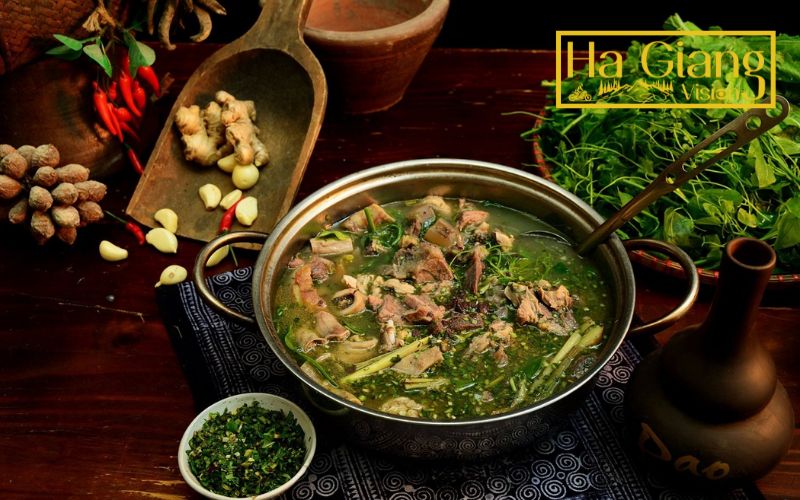
A signature dish of the Hmong people, thắng cố literally means “meat soup.” Traditionally made horse meat and organs, it’s slowly simmered with 12 mountain spices like star anise, cardamom, and lemon leaves. The meat is lightly fried before stewing, giving the broth a deep, aromatic flavor. Nowadays, some places use beef, buffalo, or pork to suit travelers’ taste. Locals often pair thắng cố with mèn mén (steamed corn powder) and a shot of corn wine at weekend markets.
2. Ấu Tẩu Porridge
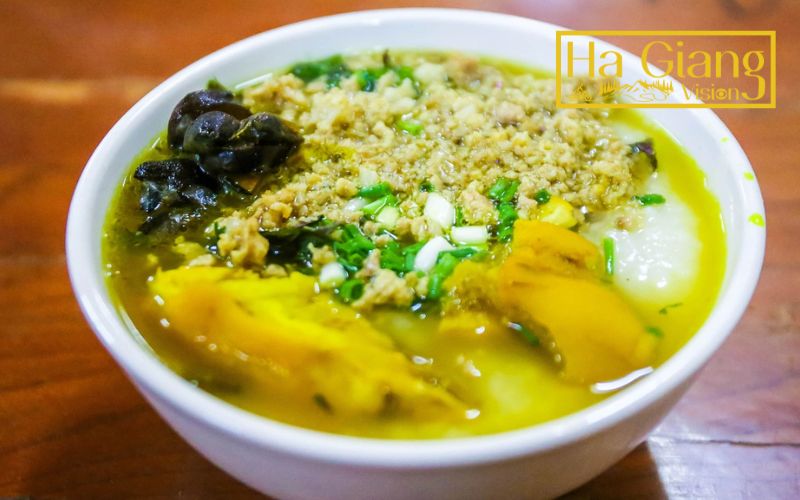
This comforting bowl of porridge combines a fatty, savory flavor with a hint of bitterness the ấu tẩu root - a tuber found only in Ha Giang. The Hmong people soak the roots in rice water, then simmer them for 4–5 hours to remove toxins. Once soft, they’re pureed and cooked with pork bone broth and yellow flower sticky rice. The porridge is topped with minced lean meat, scallions, and a drizzle of pepper. Locals swear by its health benefits - especially on cold nights in Dong Van or Meo Vac.
3. Five-Colored Sticky Rice
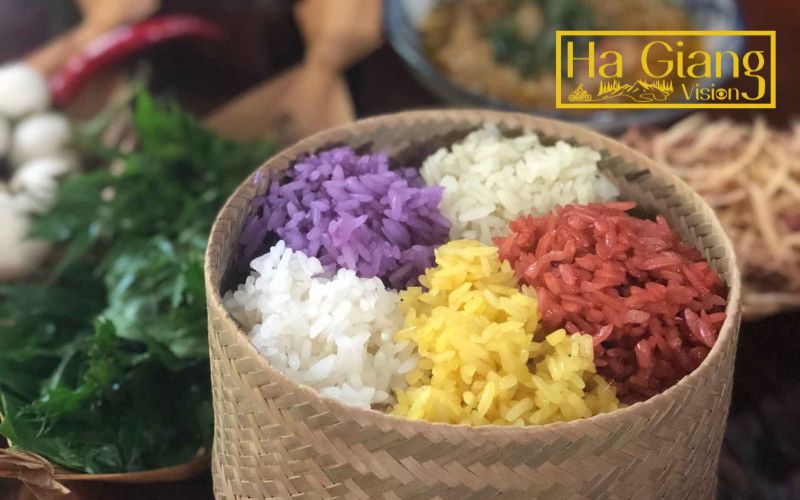
Known as xôi ngũ sắc, this dish is both beautiful and meaningful. The colors - red, yellow, green, white, and black - come natural forest leaves, not chemicals. Each hue represents one of the five elements: fire, earth, plants, metal, and water. Sticky rice is soaked in these natural dyes, then steamed to perfection. Soft, fragrant, and slightly sweet, it’s a must during festivals, symbolizing harmony between humans and nature.
4. Buckwheat Cake
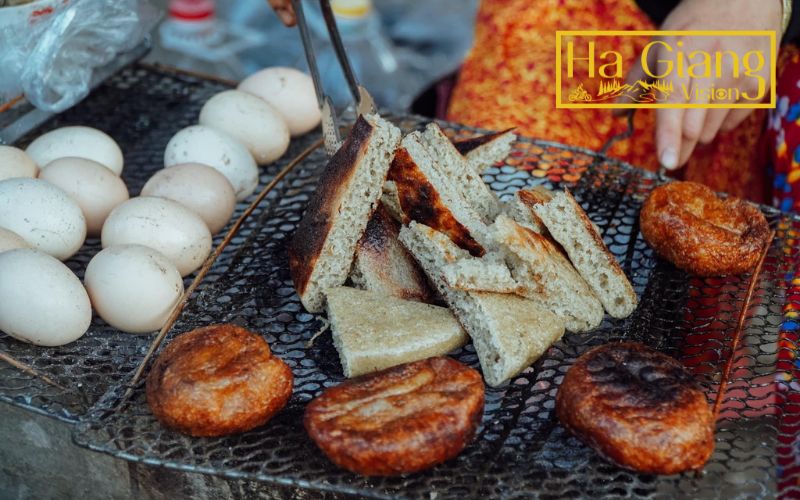
Made crushed buckwheat seeds mixed with water, this humble cake is grilled on charcoal until the surface is lightly golden. The taste is nutty and soft, with a hint of sweetness that lingers. Buckwheat flowers - blooming pink, purple, and white across Ha Giang’s mountains in autumn - are not just beautiful; their seeds are turned cakes, noodles, and even wine. This is a dish that truly captures the essence of Ha Giang.
5. Hunchback Chung Cake
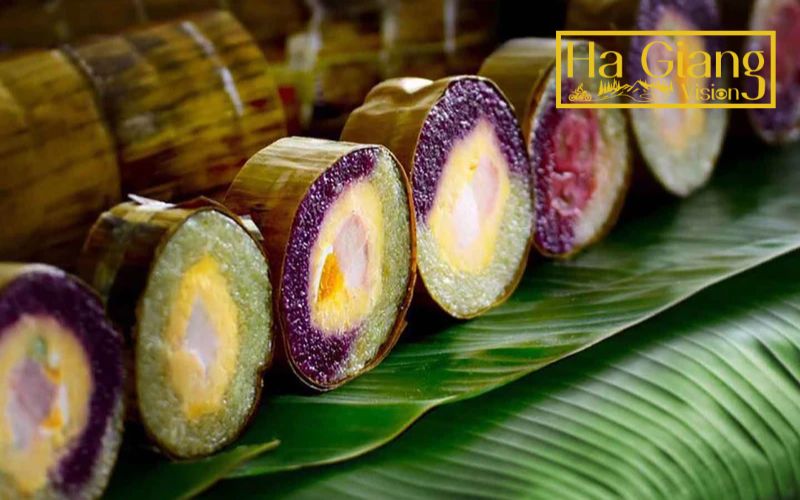
A specialty of the Red Dao people, bánh chưng gù (Hunchback Chung Cake) is made upland sticky rice, green beans, and black pork raised in local villages. Wrapped in galangal leaves, it’s boiled on a wood stove for 8–10 hours, giving the cake a rustic aroma and firm texture. Its “hunchback” shape symbolizes resilience and hard work - the spirit of the northern highlands.
6. Smoked Buffalo Meat
.jpg)
Called thịt trâu gác bếp, this dish is prepared by marinating buffalo meat in salt, chili, and herbs, then hanging it above a wood fire for weeks. The slow smoke-drying process gives the meat a rich, savory taste with a deep smoky aroma. Slightly chewy but tender inside, it’s a popular snack with rice wine and a top souvenir to bring home Ha Giang.
7. Black Chicken Hotpot
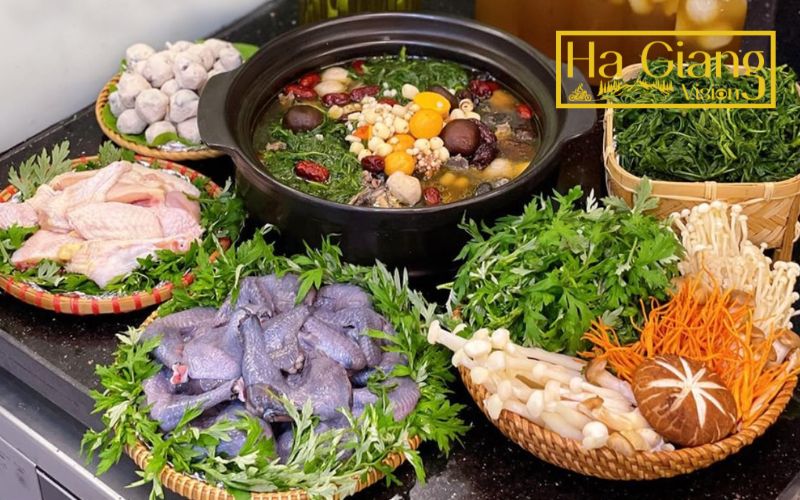
The lẩu gà đen (black chicken hotpot) uses a rare mountain chicken known for its dark skin and lean meat. The broth is simmered with medicinal herbs, ginger, and wild mushrooms, creating a rich, healing flavor. Locals love sharing this hotpot with friends and family during cold evenings - it’s not just a meal, but a symbol of togetherness and warmth.
8. Steamed Rice Roll with Egg
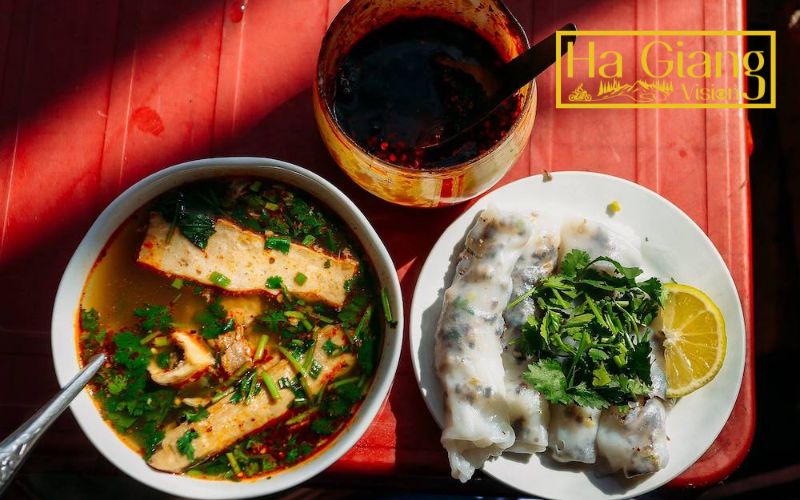
Ha Giang’s version of bánh cuốn stands out with a unique twist - a soft, steamed rice roll filled with egg and served with a hot bowl of pork bone broth instead of dipping sauce. Each bite is silky and savory, balanced by the fragrant fried shallots on top. It’s a morning ritual in Dong Van Town and the perfect way to start your day on the Loop.
9. Corn Pho
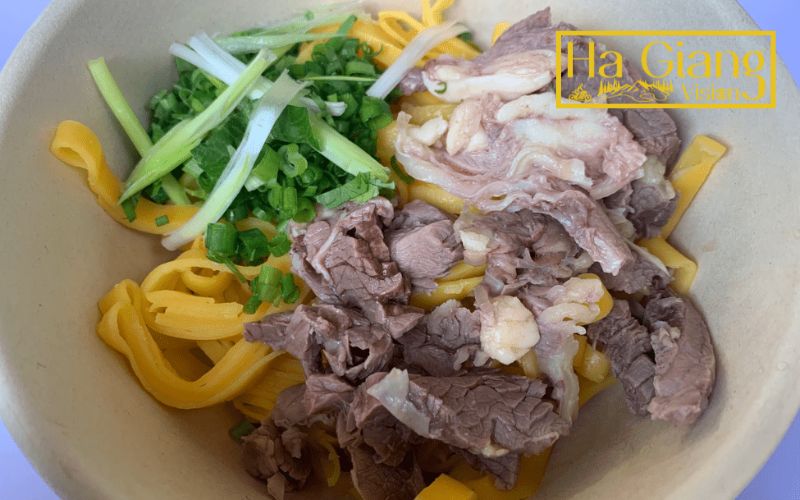
Morning in Ha Giang often begins with a bowl of phở ngô, the local corn pho. The noodles are made from ground corn harvested on the terraced fields, giving them a soft yellow hue and light sweetness. The broth, simmered slowly with pork or chicken bones, is gentle but full of depth. Topped with scallions and a touch of chili oil, it’s a simple dish that feels both comforting and new.
10. Sour Pho
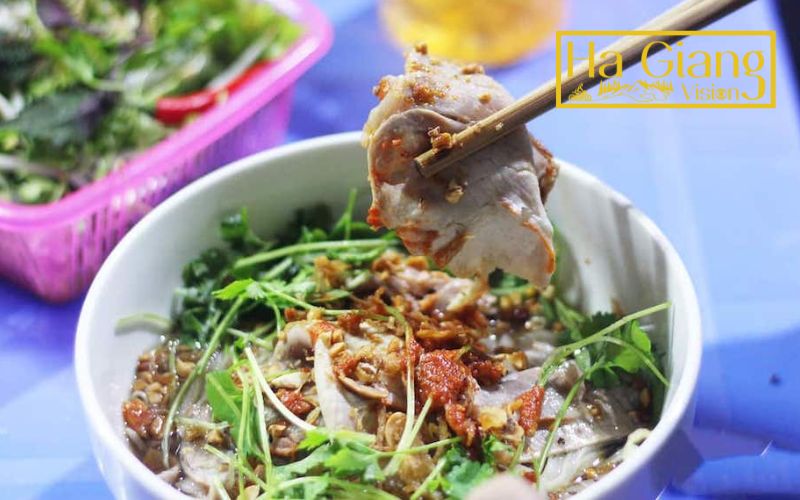
Unlike the steaming pho of the lowlands, Ha Giang’s sour pho is served cool and vibrant. The noodles are topped with meat, pickles, herbs, and crushed peanuts, then coated in a sweet-sour sauce made from local vinegar and spices. The mix of flavors is both sharp and smooth, giving this dish its distinct northern charm.
11. Hà Giang Sausage
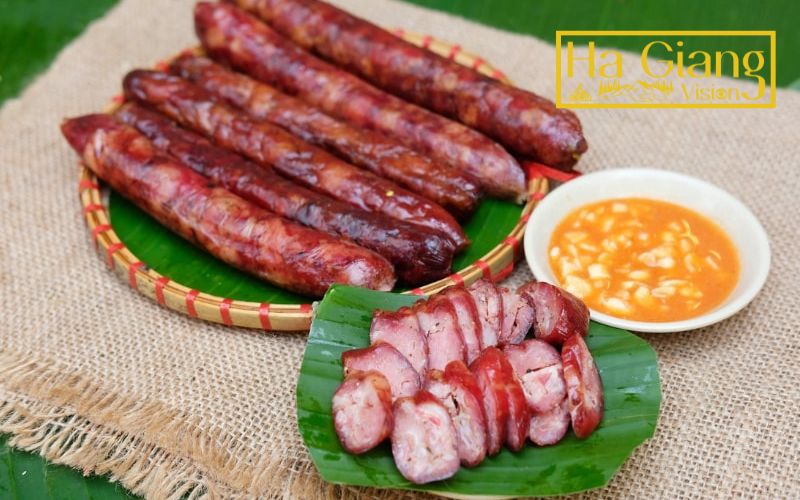
In the mountain kitchens of Ha Giang, Hà Giang sausage (lạp xưởng) is smoked slowly over wood fires until it turns glossy and rich in aroma. The pork is marinated with herbs, garlic, and local corn wine, giving each bite a balance of sweetness and spice. It’s often enjoyed during winter with a cup of warm rice wine, filling the air with the comforting scent of smoke and meat.
12. Thắng Dền
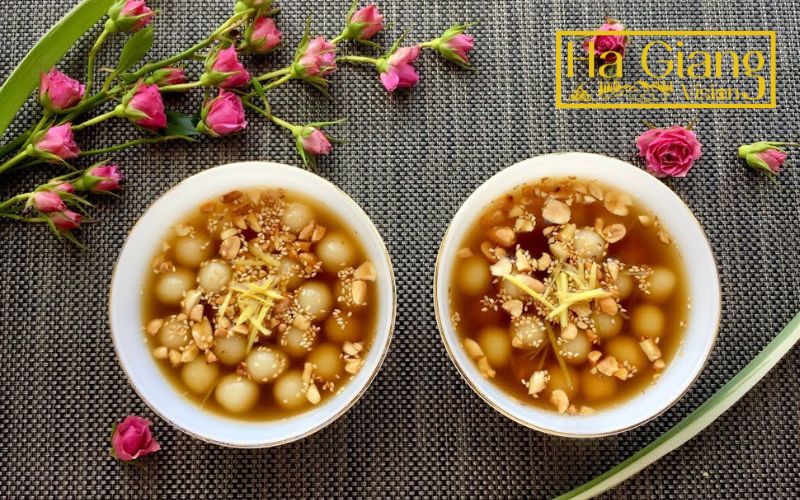
Wandering through Dong Van’s evening markets, you’ll easily spot steaming pots of thắng dền. These chewy rice balls, stuffed with sweet mung bean, are served in hot ginger syrup and topped with sesame and peanuts. The combination of warmth, spice, and sweetness makes it a local favorite on cold mountain nights.
13. Bamboo Sticky Rice
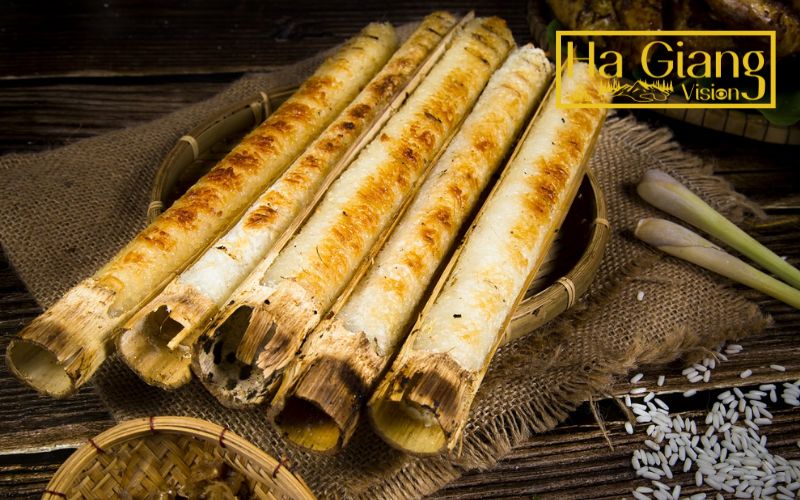
Among Ha Giang’s traditional dishes, bamboo sticky rice (cơm lam) stands out for its simplicity. Sticky rice is packed into young bamboo tubes and grilled slowly over an open flame, letting the grains soak up the gentle scent of bamboo and smoke. Soft and lightly sweet, it’s best eaten with sesame salt or grilled meat during village festivals or picnics along the Loop.
14. Corn Wine
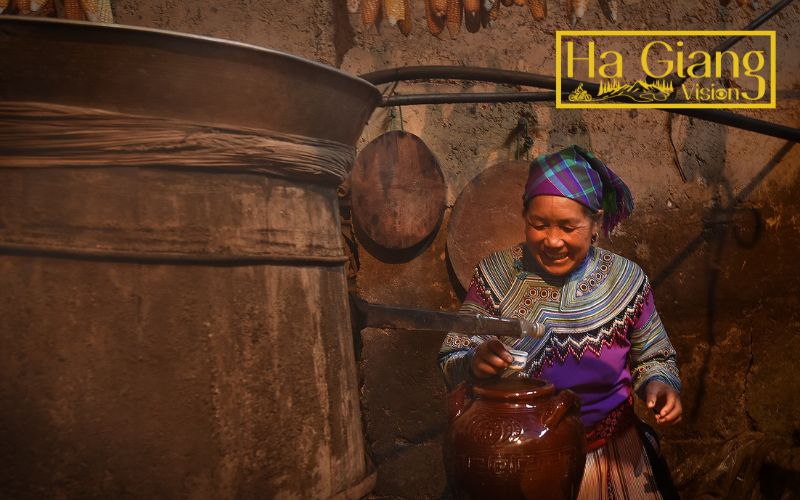
Made fermented mountain corn and spring water, rượu ngô, also known as ''happy water'', is Ha Giang’s most famous drink. It’s smooth, slightly sweet, and surprisingly strong. Every ethnic group has its own recipe, passed down for generations. Whether you’re attending a village feast or staying at a homestay, expect your host to pour you a glass - refusing it would be almost impossible!
15. Shan Tuyết Tea
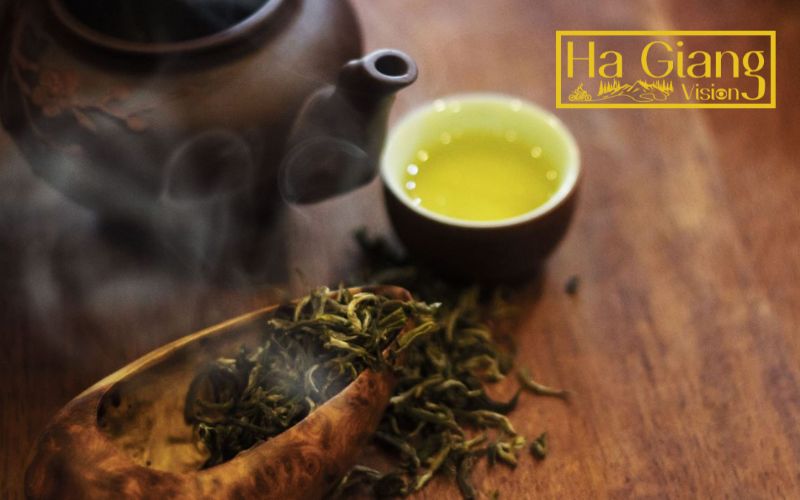
Shan Tuyết Tea originates centuries-old tea trees cultivated at high altitudes on Tay Con Linh Mountain. The leaves are covered with a white, fuzzy “snow” - hence the name. When brewed, the tea has a golden color, a floral aroma, and a sweet aftertaste. It’s a precious local product that embodies Ha Giang’s pure air and misty mountains.
Where to Try These Foods in Ha Giang
If you want the true taste of Ha Giang food, skip the tourist restaurants and go where the locals eat:
Dong Van & Meo Vac Markets: Every weekend, locals gather to sell produce, eat thắng cố, and drink corn wine. It’s chaotic, colorful, and full of flavor.
Local Homestays (Dong Van, Lung Cu, Du Gia): Enjoy home-cooked meals made with ingredients straight the family garden.
Street Stalls & Small Eateries: Along the Ha Giang Loop, you’ll find small roadside stops serving warm rice rolls, porridge, and buffalo meat - all prepared with care and authenticity.
Final Thoughts
Ha Giang food is a journey of flavor and connection - each dish carrying centuries of tradition and mountain pride. smoky buffalo meat to earthy teas, the cuisine here is as honest and soulful as its people.
Planning your next adventure? Turn your Ha Giang Loop a culinary journey - try these local dishes with a guide and experience the region’s culture through its food.

Have 0 comment, evaluate Hà Giang Food: Top 12 Must-Try Dishes During the Loop
Xin chào quý khách. Quý khách hãy để lại bình luận, chúng tôi sẽ phản hồi sớm