
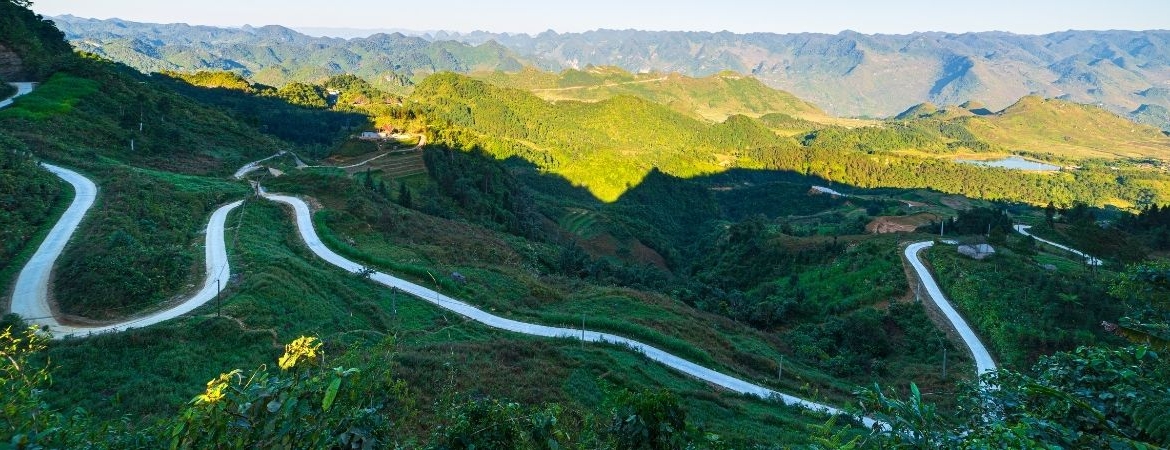
Ha Giang Loop Season Guide: Rice Terraces and Buckwheat Flowers
Table of contents
- The Two Seasons at a Glance
- Buckwheat Flower Season
- Rice Terrace Season, the Honest Version
- Month by Month, September to December
- What Peak Season Means in Practice
- Weather and What to Pack for These Months
- Documents for the Loop
- Frequently Asked Questions
- When is the best time to see buckwheat flowers in Ha Giang?
- Are the buckwheat flowers on the Ha Giang Loop?
- When do the Ha Giang rice terraces turn golden?
- Are the Hoang Su Phi rice terraces on the Ha Giang Loop?
- Can I see buckwheat flowers and golden rice on the same trip?
- Is November too crowded to ride the Loop?
- How cold is Ha Giang in November?
- Do I need a permit for the Ha Giang Loop?
- Riding the Season With Us
The Two Seasons at a Glance
| What | When | Where | On the classic Loop? |
|---|---|---|---|
| Buckwheat flowers | Late October to November | Dong Van plateau, Meo Vac, Lung Cu | Yes, it is the heart of the route |
| Golden rice terraces | Late September to early October | Hoang Su Phi, west of the Loop | No, it needs a separate trip |
| Rice in Loop valleys | September to October | Valleys such as Du Gia and Quan Ba | Yes, but green, gold or harvested depending on the week |
The short version: the classic Ha Giang Loop is especially strong for buckwheat flowers. For the large golden rice terraces seen in many photos, you need to plan Hoang Su Phi separately. If you want flowers across limestone mountains, the classic Loop is exactly where they grow.
That distinction is the one many guides skip, and it is the reason people arrive expecting one thing and ride past another.
Buckwheat Flower Season
When They Bloom
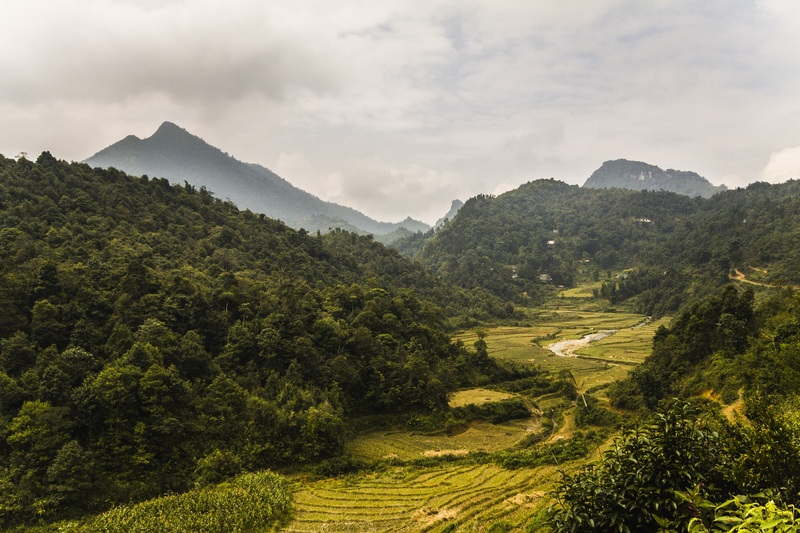
Buckwheat, known locally as tam giác mạch, starts flowering in the second half of October and runs through November. The strongest colour usually arrives in the first half of November, but the exact peak varies year to year.
The exact timing moves by one or two weeks year to year, depending on when the rain came and how cold the nights were. Treat any single date as a guide rather than a promise, and if the flowers are the only reason for your trip, aim for the middle of the season rather than either edge.
Where They Grow
This is the good news for anyone riding the Loop. Buckwheat grows on the high karst plateau in the north of the route, around Dong Van, Meo Vac, Lung Cu and the villages between them. It is planted in the gaps between the limestone, on terraces, and around traditional houses, so you ride through it rather than having to go looking for it.
The flowers themselves are small, and change colour as they age, white through pink to a deeper red. Against the grey rock of the plateau, a whole hillside of them reads as a soft pink wash. Early morning and late afternoon give the best light for photographs, and the valleys often hold mist in the first hours of the day.
The Festival
Ha Giang holds a Buckwheat Flower Festival most years around the Dong Van plateau, with events usually timed to the peak bloom between late October and November. The programme and dates are announced locally each year, so check closer to the time if you want to be there for it. The flowers are there whether or not the festival is on.
Rice Terrace Season, the Honest Version
Ha Giang does have some of the most spectacular rice terraces in Vietnam. Many of the best-known large terraces are in Hoang Su Phi, a district in the far west of the province, where terraces cover whole mountainsides across several communes and are recognised as a national heritage site.
Those terraces turn gold late September early October, just before the harvest. Farmers there plant rice once a year, so the window is narrow, and after the harvest the fields are cut and brown.
The problem is direction. Hoang Su Phi sits west of Ha Giang City, in the opposite direction the classic Loop, which heads north and east towards Dong Van. A standard three or four day Loop does not go there. Reaching the main terrace areas means planning a separate trip rather than simply adding them to a standard Loop itinerary.
What You Will See on the Loop Itself
The classic route does pass rice, just on a smaller scale. Valleys along the way, such as around Du Gia and Quan Ba, have fields that may be green, gold or already harvested depending on the exact week you ride. In late September and early October you can get lucky with golden valleys, but it is not the sweeping terrace landscape you see in the famous photographs.
If golden terraces are the main goal, plan Hoang Su Phi on purpose. If they would be a bonus, ride the Loop in late September and take whatever the valleys give you.
Month by Month, September to December
| Month | What you will see | Worth knowing |
|---|---|---|
| September | Green valleys turning gold in places, harvest starting | Drier than summer, fewer crowds, some fields already cut |
| October | Last of the rice, first buckwheat the second half of the month | Clear skies, comfortable days, cold nights on the passes |
| November | Buckwheat at its peak, usually in the first half of the month | Typically one of the busiest periods, weekends fill early |
| December | Late buckwheat in some fields, fading as the month goes on | Colder, especially at dawn, but far quieter |
What Peak Season Means in Practice
November is typically one of the busiest periods on the Loop, coinciding with peak buckwheat season. That changes a few practical things.
- Book ahead, especially for weekends. November weekends can fill up early, particularly in Dong Van and Meo Vac, so booking ahead is sensible. Weekdays are noticeably easier.
- Ride midweek if you can. Starting on a Monday or Tuesday means quieter roads, easier photo stops and fewer groups at the viewpoints.
- Expect company at the famous spots. Ma Pi Leng Pass and the best known flower fields will not be empty in November. Early starts help.
- Allow for the weather. A day of fog or rain can close a viewpoint. A four day route gives more room to wait for better conditions than a three day one.
Weather and What to Pack for These Months
Autumn is generally the most comfortable time to ride. Skies are clearer than in summer and there is less rain. The catch is the altitude. The higher passes are much colder than Hanoi, especially around dawn.
- A warm layer and a windproof jacket, even in October.
- Gloves for the early morning riding, particularly November.
- A light rain layer, because the mountains make their own weather.
- A small bag only. Leave the rest in storage in Hanoi and ride light.
Documents for the Loop
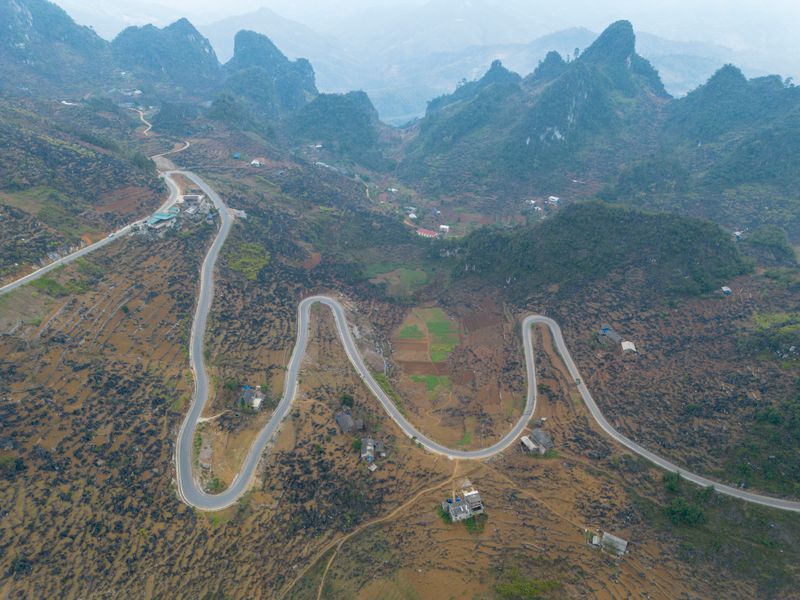
In 2026, foreign visitors riding through the designated border areas of the Ha Giang Loop should obtain a Border Area Entry Permit before setting off. Checks have become more consistent, and tour operators commonly arrange the permit as part of the booking. It currently costs around 250,000 VND per person, and it may be checked at checkpoints on the route.
If you plan to ride the motorbike yourself, Vietnamese law also requires a valid motorcycle licence your home country plus a 1968 Vienna Convention International Driving Permit with the motorcycle category. Riding as a passenger with an Easy Rider removes the licence requirement, though the border permit still applies.
One administrative note: since the 2025 provincial merger, the former Ha Giang province is part of Tuyen Quang province. You may see both Ha Giang and Tuyen Quang in travel information, maps and official documents. Nothing about the route, the flowers or the season has changed.
Frequently Asked Questions
When is the best time to see buckwheat flowers in Ha Giang?
late October through November, with the strongest colour usually in the first half of November. The exact peak varies year to year, so aim for the middle of the season rather than either edge.
Are the buckwheat flowers on the Ha Giang Loop?
Yes. They grow on the Dong Van plateau around Dong Van, Meo Vac and Lung Cu, which is the heart of the classic Loop route.
When do the Ha Giang rice terraces turn golden?
late September to early October, just before the harvest. Many of the best-known large terraces are in Hoang Su Phi.
Are the Hoang Su Phi rice terraces on the Ha Giang Loop?
No. Hoang Su Phi is west of Ha Giang City, in the opposite direction the classic Loop, and is not included in a standard three or four day route. It needs to be planned as a separate trip.
Can I see buckwheat flowers and golden rice on the same trip?
Yes, but only partially and usually not at both peaks. Late September to early October can bring golden rice, while early buckwheat appears the second half of October. Mid to late October is the overlap window, but neither is guaranteed to be at peak colour.
Is November too crowded to ride the Loop?
It is typically one of the busiest periods, coinciding with peak flower season. Ride midweek, start early, and book weekend accommodation ahead and it is very manageable.
How cold is Ha Giang in November?
The higher passes are much colder than Hanoi, especially around dawn. Bring a warm layer, a windproof jacket and gloves.
Do I need a permit for the Ha Giang Loop?
Yes, if your route enters the designated border areas of the Ha Giang Loop. In 2026 checks have become more consistent, and the permit is commonly arranged by tour operators before the ride. Confirm the current requirement and fee when booking, as local procedures can change.
Riding the Season With Us
Ha Giang Vision runs the Loop through every one of these months, with Easy Rider and self-ride options and small groups. If you want to ride for the flowers, the best move is to tell us your dates early, particularly for November weekends, so we can plan the route around the fields at their best and hold your accommodation before it fills.
If you are starting Hanoi, we can also arrange the bus the Old Quarter and your stay the night before. Take a look at our Ha Giang Loop tours, or message us with your dates and we will help you pick the right week.
Have 0 comment, evaluate Ha Giang Loop Season Guide: Rice Terraces and Buckwheat Flowers
Xin chào quý khách. Quý khách hãy để lại bình luận, chúng tôi sẽ phản hồi sớm