
Ha Giang’s Hell Village: A Deserted Land Without Young People
Overview of Ha Giang’s Hell Village
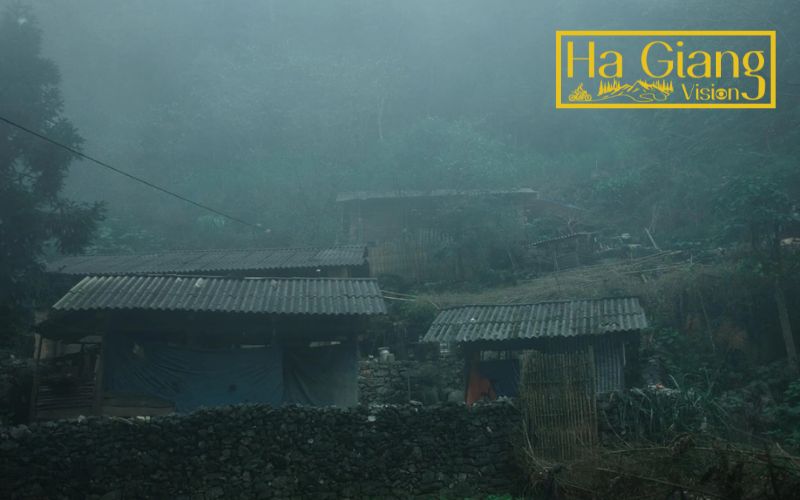
Hidden deep in the misty mountains of Dong Van District, Sao Ha Village, or Làng Địa Ngục (Hell Village), sits quietly in Van Chai Commune, Ha Giang Province. In the H’Mong language, Sao Ha means “high valley,” perfectly describing this remote settlement perched among rugged limestone peaks.
Once a simple H’mong village, Sao Ha has recently caught public attention after becoming the setting for the Vietnamese horror series “Tết ở Làng Địa Ngục” (“Hellbound Village”). The eerie charm of this real-life location has turned it into a mysterious yet captivating travel destination for adventurous travelers visiting Ha Giang.
Natural Beauty and Scenic Views in Sao Ha Hell Village
Despite its haunting nickname, Hell Village is surprisingly poetic, surrounded by terraced fields, foggy valleys, and limestone cliffs that seem to touch the clouds.
Scenic Landscape
.jpg)
Sáo Hả lies between towering mountains and valleys carved by nature’s hand. Like many of Ha Giang’s ancient villages, its winding dirt paths, moss-covered stone fences, and earthen houses create a scene that feels frozen in time. It’s a place where every step feels like walking through a forgotten story, untouched by the rush of modern life.
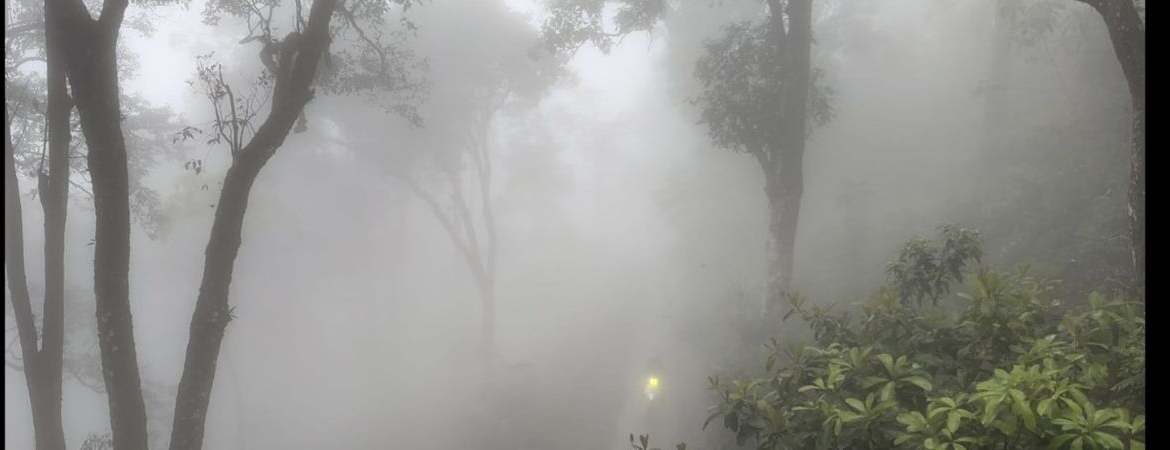
The silence of the village, broken only by the sound of wind and distant roosters, makes the scenery even more hauntingly beautiful. For photographers or travelers seeking raw authenticity, Hell Village offers a landscape that’s both peaceful and melancholic — a reminder that isolation can hold a rare kind of charm.
Seasonal Beauty
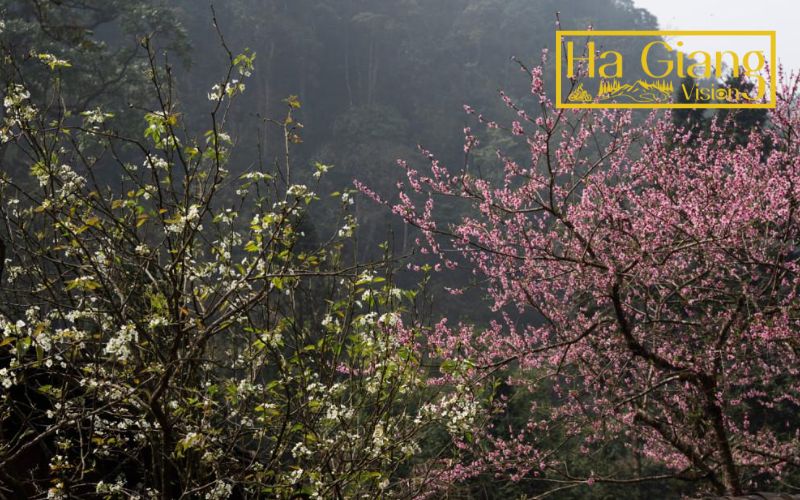
Each season paints Làng Địa Ngục in a new light. In spring, plum and peach blossoms blanket the hillsides in soft pinks and whites, while summer fills the valley with lush green cornfields and the smell of fresh earth. Autumn brings golden terraced fields, glowing under the afternoon sun, and winter wraps the entire area in thick mist.
The constant change of nature here gives the village a mystical rhythm. Travelers who visit during the foggy season often describe the place as otherworldly — the kind of beauty that feels both peaceful and eerie at the same time. Whether bright or dim, Sao Ha always manages to capture the soul of the northern highlands.
Wildlife and Flora
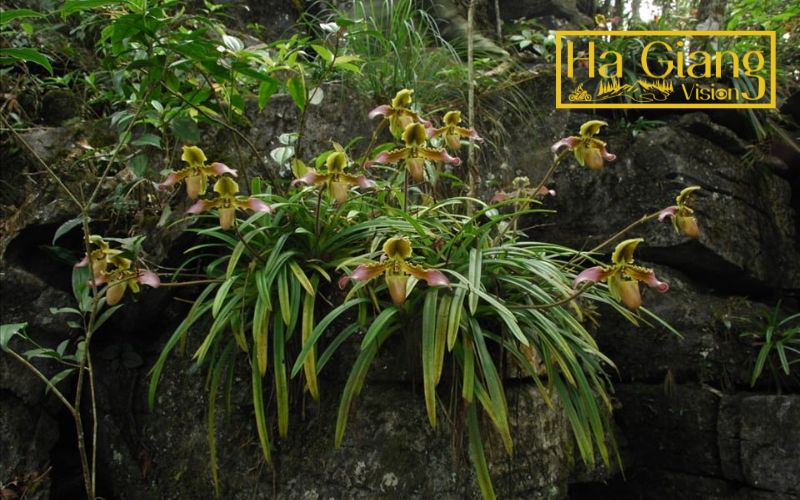
The forests surrounding Sao Ha are full of life. Wild orchids bloom along the paths, and birdsong echoes from the mountains at dawn. Locals often gather medicinal herbs, bamboo shoots, and wild vegetables, continuing a lifestyle that depends on the gifts of the land.
Despite its nickname as Hell Village, the natural world here thrives quietly. The blend of untouched forest, ancient rocks, and clear mountain air makes Sao Ha feel like a hidden garden — proof that even in isolation, nature’s beauty endures.
Unique Cultural Aspects of the H’mong Community in Sao Ha Village
Though this village may appear deserted, it still holds a strong cultural heartbeat — the kind often found in Ha Giang’s hidden villages — that speaks through the remaining residents and their timeless traditions.
Local Life
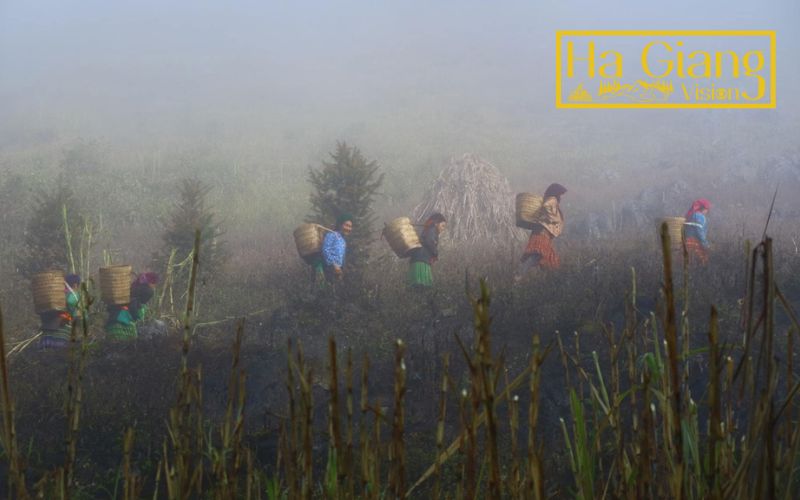
Only about 22 households still live in Sao Ha, mostly elders and small children. The villagers farm corn, hemp, and medicinal plants, while women weave colorful linen fabrics by hand. Their way of life is self-sufficient, shaped by the mountains that both nurture and isolate them.
Most young people have left for better opportunities in the cities. With little access to electricity, clean water, or schools, the village faces many hardships. Yet, the remaining elders continue their routines — tending fields, feeding livestock, and keeping alive the rhythm of H’mong life that has existed for centuries.
Distinctive H’mong Traditions
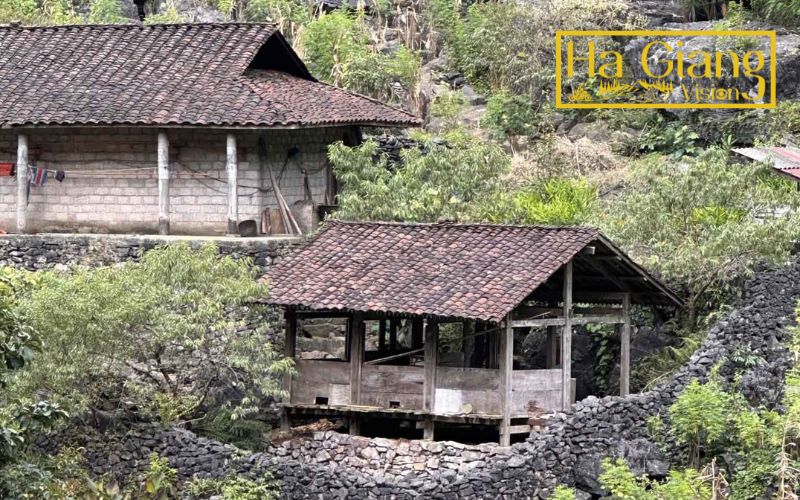
Life in such isolation has preserved many ancient customs. One of the most curious and haunting practices is that many elderly villagers prepare their own coffins and keep them at home. To the H’mong, this is not morbid — it’s a symbol of readiness and acceptance of life’s natural cycle.
For visitors, though, this tradition adds a mysterious layer to Làng Địa Ngục. Seeing these wooden coffins quietly stored in homes reminds travelers that life and death are both part of the same story here — a reality that feels eerie yet deeply human.
Architectural Heritage
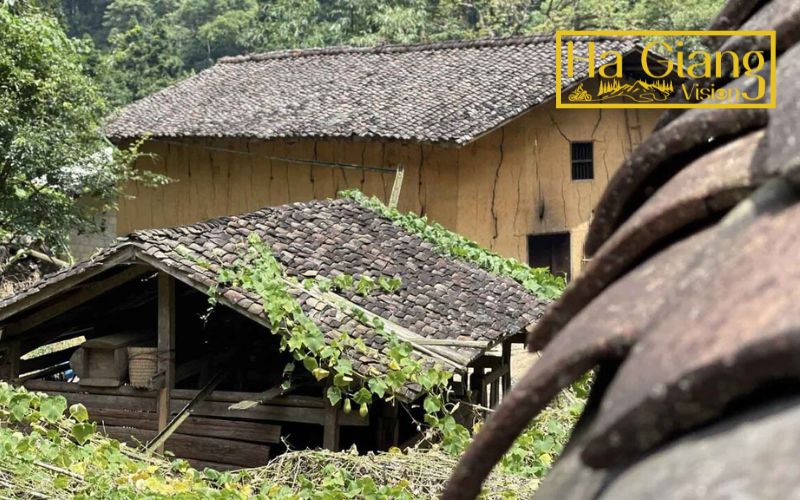
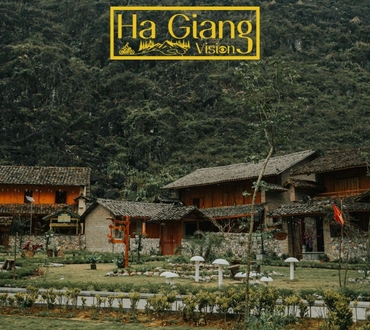
The architecture of Hell Village reflects the H’mong people’s resilience. Houses are made of thick earthen walls to resist cold winds, with yin-yang tile roofs that blend harmoniously with the mountain slopes. Clusters of these homes sit close together, creating warmth and a sense of shared protection.
Perhaps the most iconic feature of Sao Ha is its ancient stone fences. Built from natural stones stacked without cement, these walls stand up to 2.5 meters tall and are covered in moss and lichen. Their age and texture give the village a timeless, almost mythical atmosphere, especially on foggy mornings.
Local Beliefs and Legends
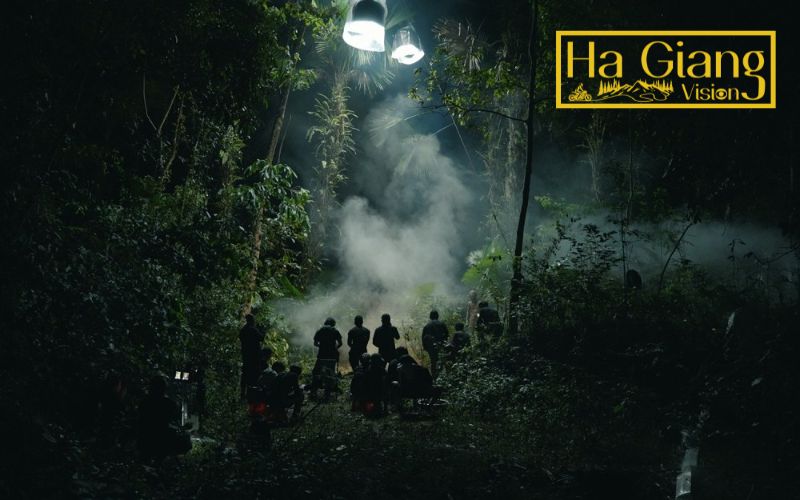
Spirituality runs deep in Sao Ha. The H’mong believe every stone, tree, and stream carries a spirit, and that harmony with nature keeps the village safe. Small shrines and offerings can be found at the edges of fields or beside old trees, quietly blending with the landscape.
Visitors can also explore the Sao Ha Shrine and listen to legends about Hang Phi Cave, said to be home to guardian spirits protecting the valley. These stories, passed down through generations, add a fascinating depth to the cultural fabric of Làng Địa Ngục, where folklore and daily life intertwine seamlessly.
How to Go to Sao Ha Hell Village
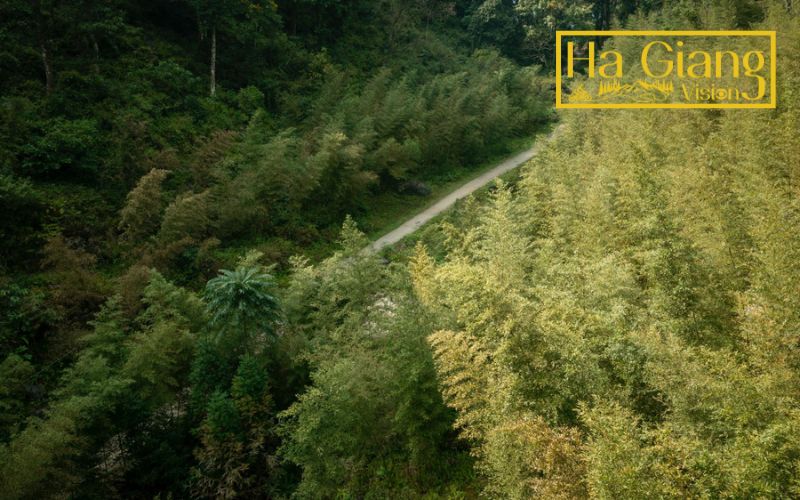
Getting to Hell Village (Làng Địa Ngục) is not easy, but that’s part of its mystery. The narrow roads, mountain passes, and misty landscapes make the journey unforgettable.
The Route to Sao Ha Village
Sao Ha lies deep in Dong Van District, surrounded by rugged limestone mountains.
Start from Ha Giang City, following National Road 4C.
Ride past Quan Ba Heaven Gate and the Twin Mountains viewpoint.
Continue through Tham Ma Pass, a winding stretch famous among Ha Giang loop riders.
Turn toward Van Chai Commune, where Sao Ha Village sits quietly off the main road.
Recommended Transportations
Getting there is easiest for those confident on two wheels.
Motorbike is the best option — flexible, affordable, and lets you stop for photos.
Trekking is possible if you’re fit and looking for a deeper local experience.
Essential Tips Before You Go
Prepare for limited services and the village’s isolated nature.
Bring water, snacks, and a flashlight — no stores or restaurants available.
Carry cash — no ATMs or mobile payment signal.
Pack warm layers, as temperatures drop fast at dusk.
Visit early morning or late afternoon for soft light and mountain mist.
Expect rough, uneven roads and possible landslides after rain.
Fuel up before leaving the city — there are no repair shops or gas stations nearby.
Always ask before photographing locals — respect their privacy and traditions.
Final Thoughts
Sao Ha Hell Village may sound frightening by name, but its haunting charm lies in silence, tradition, and untouched beauty. This “abandoned” place tells the story of a community caught between the past and the present — where old souls continue to live in harmony with the mountains. The quiet roads, misty peaks, and echoes of H’mong culture will stay with you long after you leave.
For a deeper journey through northern Vietnam’s hidden gems, explore the Ha Giang Loop with Ha Giang Vision and uncover more remote villages like this one.

Have 0 comment, evaluate Ha Giang’s Hell Village: A Deserted Land Without Young People
Xin chào quý khách. Quý khách hãy để lại bình luận, chúng tôi sẽ phản hồi sớm